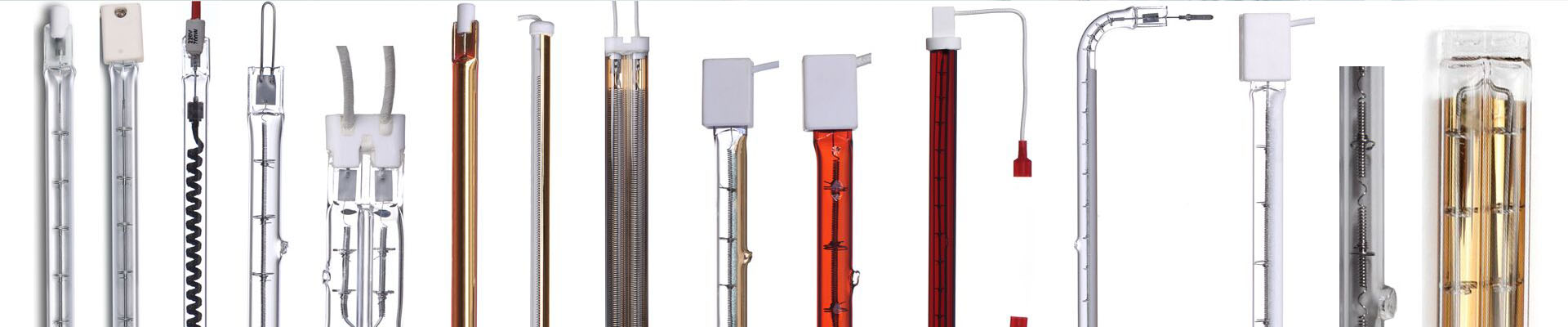
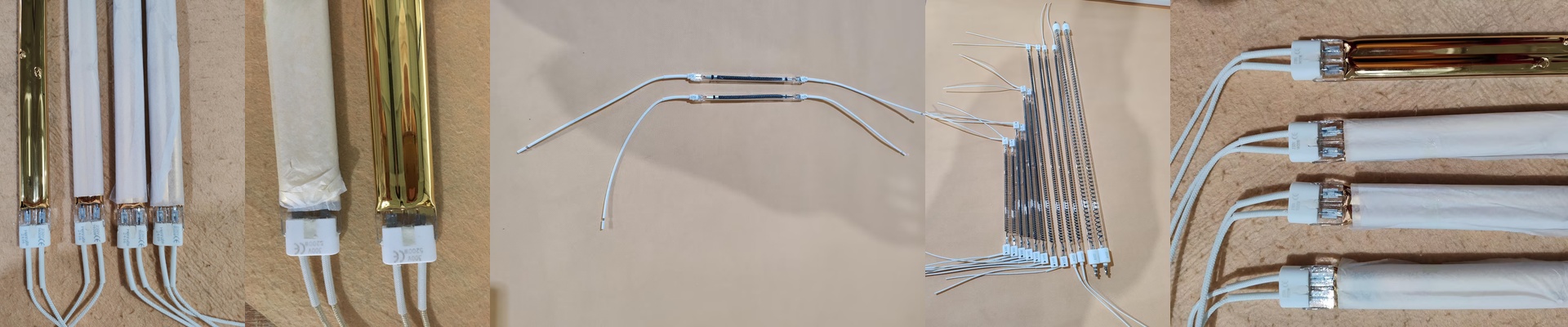
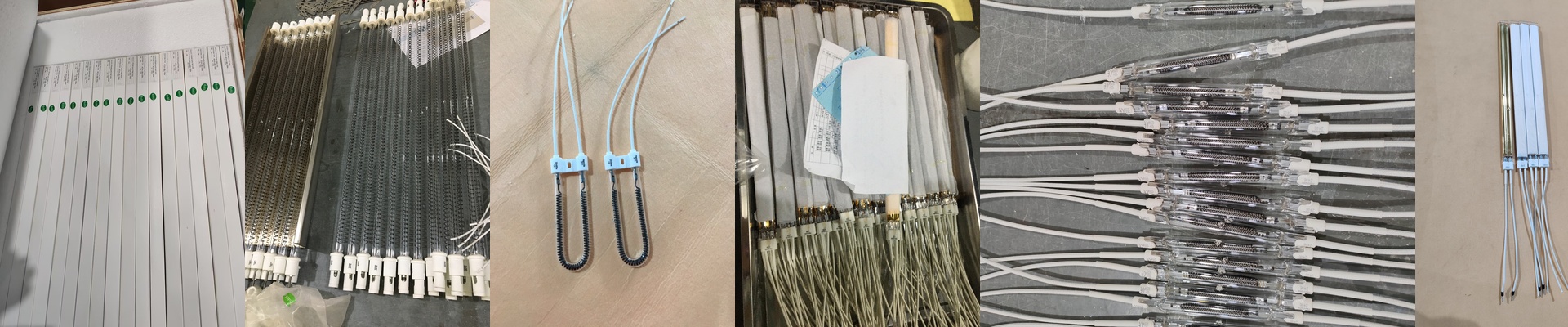
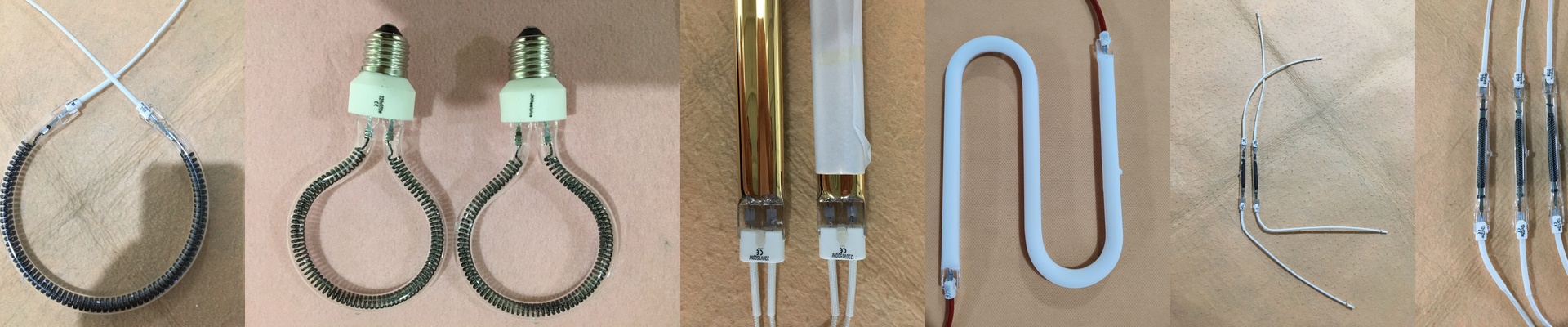
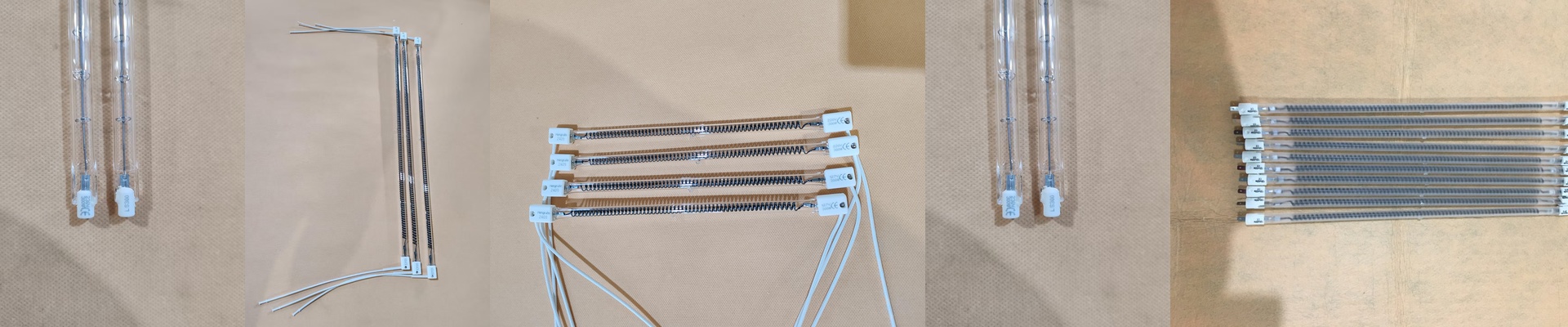
Infrared Carbon Heating Lamps: Built for the real world
We make infrared carbon heating lamps for one simple reason: to get heat where you need it, fast. These aren’t your run-of-the-mill heaters. They’re purpose-built to pack serious heat into a small footprint—and tough enough to hold their own on a busy production line.
Power, voltage, and why the details matter
When it comes to performance, wattage density is the name of the game. Take our 2500W lamp on a 300mm tube. That’s a lot of energy in a tight space. And that’s exactly the point. It lets you hit a small target hard and fast, without wasting energy heating up the air or the machine around it. Then there’s voltage. We choose 400V because it lets you run the same wattage with lower current than a 230V design. Lower current means smaller wiring, less voltage drop, and less heat building up in your terminals. It also takes stress off switches and connectors. Less strain, more reliability. And that 300mm length? It wasn’t picked at random. It’s short enough to squeeze into tight spots, but long enough to give you a solid mounting span and a consistent radiation pattern. In other words, you get repeatable heat every time you position it.
What’s inside: halogen, quartz, and the R7s base
Inside, you’ve got a carbon filament, but the system runs on a halogen cycle. That cycle keeps the quartz envelope clean by sending evaporated material back to the filament. The payoff? Stable output over time and fewer hot spots from blackening. The quartz envelope isn’t an accident, either. It lets shortwave infrared through cleanly and handles rapid heating and cooling without cracking under pressure. And the R7s base? It’s just a practical, industrial-grade choice. Those straight pins give you solid contact and stay cool under high temps. It makes the lamp a simple drop-in replacement in standard fixtures, which means maintenance is quick and painless. Wire it up, set your clearances, and you’re good.
Heat where it counts, without the fuss
In the real world, these lamps shine wherever you need fast, focused heating—like softening plastic, curing adhesives, or preheating a specific spot. Shortwave infrared heats the target directly, not the air around it. That direct approach speeds up cycle time because the energy lands exactly where the work is. It also keeps heat away from nearby parts that can’t handle high temperatures. Now, a heads-up: high heat density means you need to plan for it. Make sure you’ve got proper airflow, the right clearances, and a thermally rated reflector setup. Treat it like the high-output component it is, and it’ll run reliably. We spec these lamps for industrial duty cycles, and we build them so they can be swapped out fast when maintenance rolls around.